
FROM KWALE TITLE DEEDS TO RUTO'S KISII TOUR: ARE GOVERNMENT DEVELOPMENT PROMISES BECOMING PUBLIC RELATIONS EXERCISES?
Kwale's disputed title deeds and Ruto's upcoming Kisii tour raise questions about government promises, stalled projects, public spending and accountability.

Watch Getembe TV Live
Broadcast Getembe TV Live Stream
Listen Getembe FM Live
Tune in to Getembe FM Live Broadcast
The credibility of government development projects is facing renewed scrutiny following complaints by residents in Kwale County over title deeds issued under President William Ruto's administration, even as the Head of State prepares for another three-day development tour of Kisii and Nyamira counties.
The two developments raise a broader question about how Kenya measures government performance: Are citizens receiving the promised services and projects, or are political leaders increasingly judged by the number of launches, announcements and commissioning ceremonies they preside over?
The concerns gained prominence following the Linda Mwananchi Movement's tour of Kwale on October 31, led by Nairobi Senator Edwin Sifuna, where residents raised questions about land ownership, mineral exploitation and the transparency of government development arrangements.

One issue that particularly illustrates the accountability challenge is the government's land titling programme.
During his Coast tour in October, President Ruto presided over the issuance of thousands of title deeds, including more than 26,000 documents to residents of Lunga Lunga Constituency in Kwale.
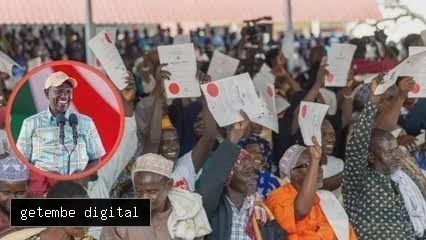
The President presented the exercise as part of efforts to resolve longstanding land ownership disputes and address the historical marginalisation of Coast residents.
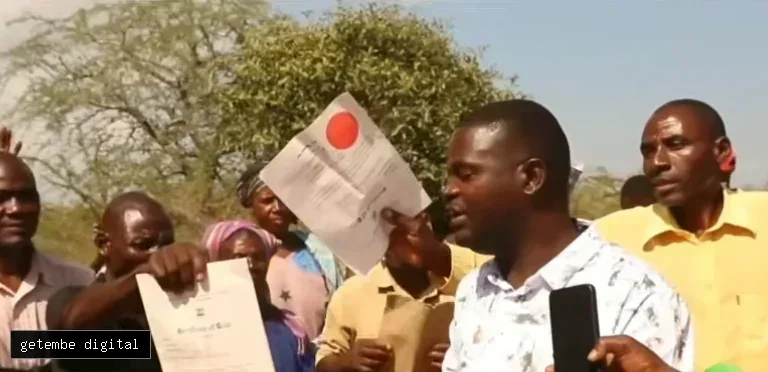
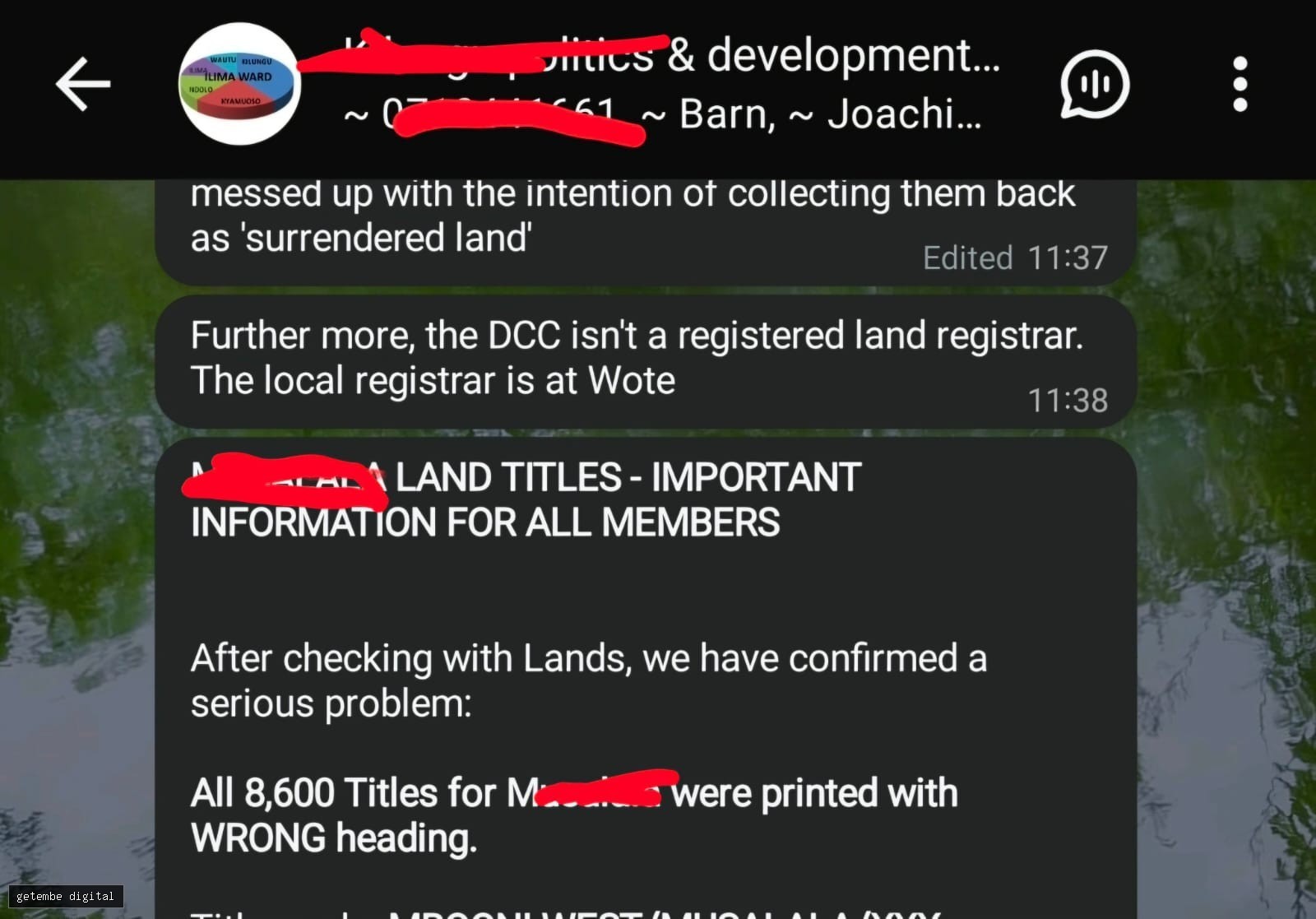
However, weeks after the exercise, some beneficiaries began surrendering their title deeds, alleging that the documents contained additional payment conditions, disputed land measurements and irregularities in allocation.
Others claimed they had been unable to use the documents to secure bank loans after financial institutions reportedly questioned their validity.
John Kassim, a Lunga Lunga resident, said beneficiaries had been assured that the necessary payments had been settled before the documents were issued.
The complaints do not establish that the entire titling programme was defective, but they raise questions about the verification processes that preceded the public handover.
If the government had completed the necessary surveys, beneficiary verification and registration procedures, why are some recipients now questioning the documents they received?
More importantly, who takes responsibility when a project announced as a major development achievement fails to meet the expectations of its intended beneficiaries?
The questions surrounding Kwale come at a time when President Ruto is preparing to visit Kisii and Nyamira counties between November 9 and 11, 2026, for a three-day development tour.
South Mugirango MP and National Assembly Majority Whip Silvanus Osoro has announced that the President will launch and inspect various projects, including the Sengenya-Openda-Karungu-Kiagware Road and the Nyakeyo-Nyamasege-Nyakorere-Moma roads.

Osoro has also hinted at major announcements during the visit, although the complete itinerary and details of the additional projects have yet to be publicly disclosed.
The visit comes approximately seven months after Ruto's April development tour of the region, during which he launched and inspected projects covering roads, water, healthcare, education and sports.

Among the announcements was the construction of 50 kilometres of roads in Nyaribari Chache, alongside plans for an additional 220 kilometres of roads across Kisii County.
He also launched the Sh700 million rehabilitation and expansion of the Kisii water supply network and announced an additional Sh350 million allocation for solarising an 80-kilometre water pipeline.
The State Department for Roads subsequently published details of several road projects launched during the April visit, including the 50-kilometre Nyaribari Chache road network.
With another development tour approaching, residents have an opportunity to demand more than fresh announcements. They can ask the government to account for the projects launched during previous visits, their implementation status, expenditure and expected completion dates.
Are the roads launched in April progressing according to schedule? Has the water expansion project translated into improved water access? What is the implementation status of the other initiatives announced during the previous visit?
These are not unreasonable questions. They are necessary tests of whether development commitments are translating into public services.
The Auditor-General's reports provide further context to the accountability debate.
In its 2023/2024 report on county governments, the Office of the Auditor-General documented numerous stalled and abandoned projects across county administrations.
The report identified four stalled projects in Kwale County with a combined contract sum of approximately KSh352.8 million. Nyamira County also had two stalled projects with a combined contract sum of approximately KSh130.1 million.
At the national government level, the Auditor-General's 2023/2024 report on donor-funded projects identified low absorption of funds in 44 projects, raising concerns that some programmes could end without implementing all their planned activities.
The report also identified ineligible expenditure amounting to approximately KSh1.33 billion across 10 projects, alongside KSh4.37 billion spent on interest arising from delayed payments.
These findings demonstrate why government performance cannot be measured solely by the amount of money announced or the number of projects launched.
A project may receive funding, attract political attention and even feature in an official development report without necessarily delivering the intended benefits to citizens.
The Kwale tour also revived questions surrounding the proposed exploitation of minerals at Mrima Hill.
Sifuna demanded the publication of agreements involving the proposed mining investment, arguing that residents should understand the terms governing land ownership, compensation and revenue sharing before the exploitation of their natural resources begins.
The proposed project involves niobium and rare earth minerals, which are important in industries such as electronics, aerospace and electric vehicle manufacturing.
With five bidders reportedly submitting proposals for the project, the question of who ultimately benefits from the resources has become particularly important.
Kenya has previously had mining operations in Kwale through Base Titanium's mineral sands project, which operated for more than a decade.
Sifuna questioned whether the community had received the benefits promised under previous mining arrangements and demanded greater transparency before another major investment proceeds.
The National Treasury's Development Partner Project Management Information System provides a public register of development partner-supported projects.
As of October 17, 2026, the register contained 316 approved project records covering 10 sectors and all 47 counties.
However, the register is specifically focused on development partner-supported projects and should not be mistaken for a comprehensive list of every government-funded initiative.
Some records also contain incomplete public-facing details, including locations or implementation dates marked as yet to be determined.
This raises a broader question about how easily citizens can trace the money allocated to development programmes, identify the contractors involved, establish implementation timelines and verify whether the promised outcomes have been achieved.
The Constitution provides for public participation and access to information, while Article 201 establishes principles of openness, accountability and public participation in financial matters.
Consequently, transparency should not be treated as a favour granted by government officials. It is a fundamental requirement of public administration.
Kenya does not lack development promises. From affordable housing and markets to roads, hospitals, water projects, land titling and mineral investments, the government regularly announces initiatives intended to transform communities.
But the credibility of these programmes cannot be established through presidential speeches, commissioning ceremonies, budget allocations or impressive project statistics alone.
A title deed must provide secure ownership. A hospital must offer healthcare. A completed market must be operational. A road must be accessible. A mining investment must have transparent terms that protect the interests of affected communities.
As President Ruto prepares to visit Kisii and Nyamira, residents should be able to distinguish between projects being launched for the first time, those already under construction, those completed and those still awaiting implementation.
The government should publish project budgets, contractors, funding sources, implementation timelines and independently verifiable progress reports.
It should also explain what happened to previous commitments before introducing new ones.
Ultimately, the concern is not whether the President should visit counties or launch development projects. Such engagements can be useful in accelerating implementation and addressing local challenges.
The concern is whether these visits produce measurable improvements or become recurring political occasions where old promises are repackaged alongside new ones.
If residents in Kwale are questioning title deeds presented as a government achievement, what assurance do residents in Kisii have that the next round of development announcements will translate into lasting results?
And when the President leaves after three days, will citizens have a clear record of what was promised, what was funded, what was completed and what remains outstanding?
Government credibility should not depend on how loudly a project is announced, but on whether citizens can independently verify that it was delivered.
ADVERTISEMENT
Watch Getembe TV Live
Broadcast Getembe TV Live Stream
Listen Getembe FM Live
Tune in to Getembe FM Live Broadcast
How do you feel about this article?
Let us know by choosing a reaction below.

Written by FRANKLINE NYANDORO
Reporter and staff writer at Getembe News.
Comments 0
Please log in to participate in the comments section.
No comments yet. Be the first to share your thoughts!
ADVERTISEMENT
Related Stories


Have a news tip?
Do you have an investigation, local story or news event you think we should cover? Contact our newsroom directly.
Submit Tip
Mobile App
Download Getembe Digital App Today
Download Getembe Digital App today for live news updates, breaking notifications, and seamless live streaming.