
GONE 30 YEARS, NEVER FORGOTTEN: THE ENDURING LEGACY OF JOHN ARIISI O’SABABU Nyamira, Kenya.
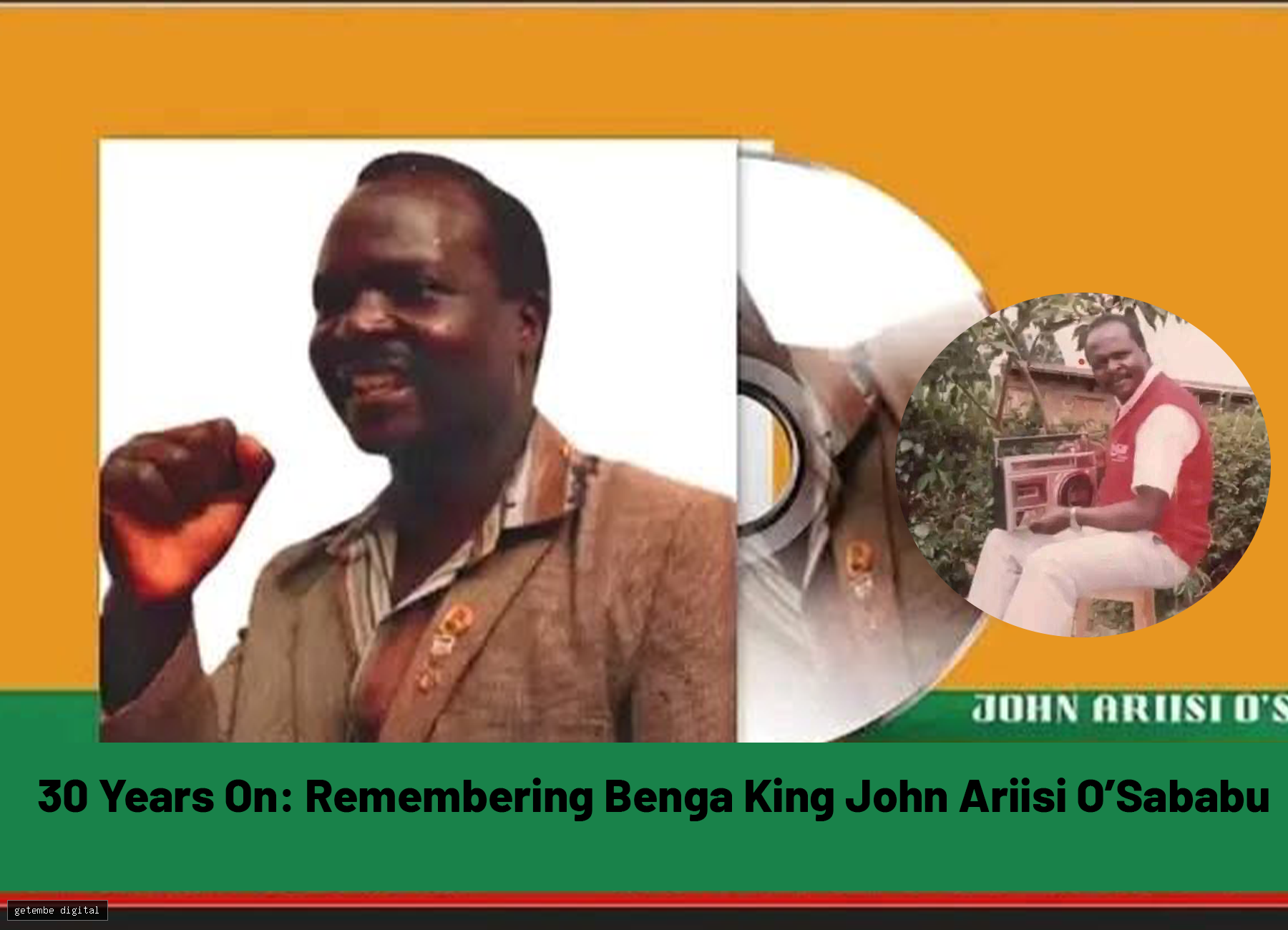
30 years ago today, the Gusii region lost a musical legend. John Ariisi O’Sababu, the iconic “King of Benga,” died at Nyamira Hospital, leaving behind a legacy that continues to resonate across generations.
Watch Getembe TV Live
Broadcast Getembe TV Live Stream
Listen Getembe FM Live
Tune in to Getembe FM Live Broadcast
Crowds gathered rapidly at the hospital. The subsequent funeral procession from the mortuary to his home in the hilly village of Kirwanda in Bonyakoni, Ikonge, stretched for hours because of the sheer number of mourners. Police from across Nyamira were mobilised to manage the throngs. Prominent figures, including Members of Parliament and cabinet ministers of the time, attended the burial in the small village, an event later recalled by contemporaries as one of the largest funerals in Gusii history.
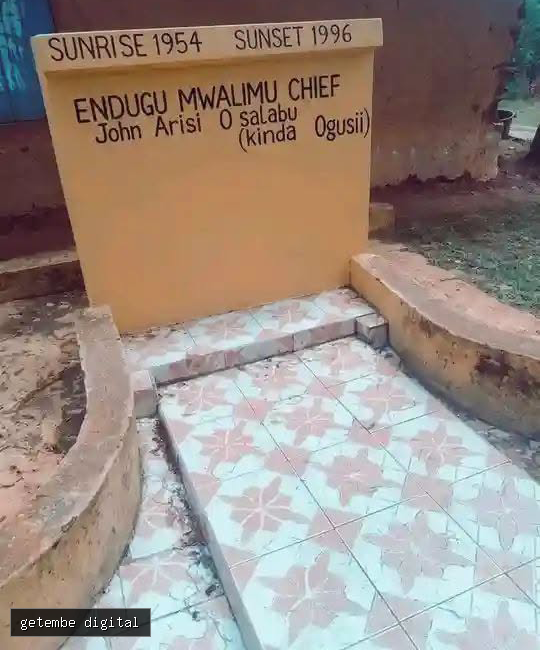
O’Sababu was 42. Born in 1954 in Bonyakoni, North Mugirango Constituency, Nyamira County, he began his professional life as a teacher. He was known for performing in school choirs as a youth and drew early musical influence from his father. In 1978 he launched a full music career, founding and leading the Kirwanda Songa 78 Jazz Band. Over the next nearly two decades he became a household name across the Gusii community and beyond, earning titles such as “King of Benga,” “Kanda Ogusii,” and “Mwalimu Chief.”
His music was rooted in Benga with occasional Lingala influences and was delivered primarily in Ekegusii. The songs were narrative and grounded in everyday life. They addressed love and heartbreak, community morals, education, social criticism, and the commemoration of individuals. Tracks such as Engaki y’esuguku (a Christmas favourite still widely played), Omwanchi Jane (also known as Jane Posta), Esabari Nyaribari, Endugu Joshua, Abana Bane Soma, and many others circulated on compact cassettes, locally called ekenanda. In an era before widespread video production or social media, these cassettes united listeners in homes, markets, and social gatherings across the region.

O’Sababu’s approach was distinctive for its emotional directness and storytelling. He often sang about real people and real situations, giving ordinary experiences a public voice. One well-known example is the ballad about a romance that began at Ikonge market and continued through letters and unanswered visits to the post office. Other songs educated, warned against social ills, or celebrated communal values. When then-President Daniel arap Moi visited Nyamira, O’Sababu performed a piece that highlighted the community’s need for infrastructure development.
In December 1995 he released Volume 11, titled Nyanduko Lab. Reports from the period indicate it sold around 10,000 cassettes in its first week and remained popular into the following year. He had already composed material for Volume 12, but illness prevented him from recording it. After his death, remaining band members attempted to complete the project, but the results did not match earlier standards. The suddenness of his passing amplified the shock; many fans learned of his illness only when news of his death broke.

In the immediate aftermath, the KBC Ekegusii radio service, then based in Kisumu and the primary station broadcasting in the language, played his music extensively. Demand for his cassettes surged. Three decades later, that demand has shifted to digital platforms. Official and fan-maintained YouTube channels dedicated to his catalogue continue to attract hundreds of thousands of views per track. Regional radio stations still rotate his songs, with Engaki y’esuguku remaining a seasonal staple during Christmas celebrations among Abagusii communities in Kenya and the diaspora.
Family members have worked to preserve and extend the catalogue. His son Sababu Ariisi O’Sababu has overseen the digitisation of older recordings, the production of videos for classic tracks, and the continuation of the Kirwanda Songa 78 Jazz Band under the family name. Other relatives, including artists linked to the broader family, have also contributed to keeping the repertoire alive. Local commentators frequently describe O’Sababu’s body of work as a high-water mark for Gusii Benga that later artists have struggled to match in emotional depth and compositional consistency.
O’Sababu’s influence extended beyond entertainment. His songs functioned as a form of social documentation and moral instruction at a time when formal media in Ekegusii was limited. Listeners of different generations still report strong personal connections to specific tracks that mirrored their own experiences of love, loss, family responsibility, or community change. The music’s survival in the digital age, long after the cassette era that first carried it, underscores its lasting cultural resonance.
On this 30th anniversary, commemorations remain largely informal and community-driven. Fans share tracks online, radio presenters replay classics, and family-linked channels continue uploading material. No large-scale state event has been announced, yet the steady stream of plays and discussions demonstrates that the voice that fell silent on August 11, 1996, continues to be heard across generations of Gusii listeners and admirers of Kenyan Benga.
John Ariisi O’Sababu left behind a recorded legacy that outlived the technology that first distributed it. Thirty years on, that legacy remains an active part of the region’s cultural life.
O’Sababu was 42. Born in 1954 in Bonyakoni, North Mugirango Constituency, Nyamira County, he began his professional life as a teacher. He was known for performing in school choirs as a youth and drew early musical influence from his father. In 1978 he launched a full music career, founding and leading the Kirwanda Songa 78 Jazz Band. Over the next nearly two decades he became a household name across the Gusii community and beyond, earning titles such as “King of Benga,” “Kanda Ogusii,” and “Mwalimu Chief.”
His music was rooted in Benga with occasional Lingala influences and was delivered primarily in Ekegusii. The songs were narrative and grounded in everyday life. They addressed love and heartbreak, community morals, education, social criticism, and the commemoration of individuals. Tracks such as Engaki y’esuguku (a Christmas favourite still widely played), Omwanchi Jane (also known as Jane Posta), Esabari Nyaribari, Endugu Joshua, Abana Bane Soma, and many others circulated on compact cassettes, locally called ekenanda. In an era before widespread video production or social media, these cassettes united listeners in homes, markets, and social gatherings across the region.
O’Sababu’s approach was distinctive for its emotional directness and storytelling. He often sang about real people and real situations, giving ordinary experiences a public voice. One well-known example is the ballad about a romance that began at Ikonge market and continued through letters and unanswered visits to the post office. Other songs educated, warned against social ills, or celebrated communal values. When then-President Daniel arap Moi visited Nyamira, O’Sababu performed a piece that highlighted the community’s need for infrastructure development.
In December 1995 he released Volume 11, titled Nyanduko Lab. Reports from the period indicate it sold around 10,000 cassettes in its first week and remained popular into the following year. He had already composed material for Volume 12, but illness prevented him from recording it. After his death, remaining band members attempted to complete the project, but the results did not match earlier standards. The suddenness of his passing amplified the shock; many fans learned of his illness only when news of his death broke.
In the immediate aftermath, the KBC Ekegusii radio service, then based in Kisumu and the primary station broadcasting in the language, played his music extensively. Demand for his cassettes surged. Three decades later, that demand has shifted to digital platforms. Official and fan-maintained YouTube channels dedicated to his catalogue continue to attract hundreds of thousands of views per track. Regional radio stations still rotate his songs, with Engaki y’esuguku remaining a seasonal staple during Christmas celebrations among Abagusii communities in Kenya and the diaspora.
Family members have worked to preserve and extend the catalogue. His son Sababu Ariisi O’Sababu has overseen the digitisation of older recordings, the production of videos for classic tracks, and the continuation of the Kirwanda Songa 78 Jazz Band under the family name. Other relatives, including artists linked to the broader family, have also contributed to keeping the repertoire alive. Local commentators frequently describe O’Sababu’s body of work as a high-water mark for Gusii Benga that later artists have struggled to match in emotional depth and compositional consistency.
O’Sababu’s influence extended beyond entertainment. His songs functioned as a form of social documentation and moral instruction at a time when formal media in Ekegusii was limited. Listeners of different generations still report strong personal connections to specific tracks that mirrored their own experiences of love, loss, family responsibility, or community change. The music’s survival in the digital age, long after the cassette era that first carried it, underscores its lasting cultural resonance.
On this 30th anniversary, commemorations remain largely informal and community-driven. Fans share tracks online, radio presenters replay classics, and family-linked channels continue uploading material. No large-scale state event has been announced, yet the steady stream of plays and discussions demonstrates that the voice that fell silent on August 11, 1996, continues to be heard across generations of Gusii listeners and admirers of Kenyan Benga.
John Ariisi O’Sababu left behind a recorded legacy that outlived the technology that first distributed it. Thirty years on, that legacy remains an active part of the region’s cultural life.
ADVERTISEMENT
Watch Getembe TV Live
Broadcast Getembe TV Live Stream
Listen Getembe FM Live
Tune in to Getembe FM Live Broadcast
How do you feel about this article?
Let us know by choosing a reaction below.
#JohnAriisi
#Osababu
#BengaKing
#GusiiMusic
#KisiiMusic
#BengaMusic
#GusiiLegend
#KenyanMusic
#MusicLegend
#30YearsOn
#NeverForgotten
#LegacyLivesOn
#GusiiHeritage
#KisiiHeritage

Comments 0
Please log in to participate in the comments section.
No comments yet. Be the first to share your thoughts!
ADVERTISEMENT
Related Stories

Have a news tip?
Do you have an investigation, local story or news event you think we should cover? Contact our newsroom directly.
Submit Tip
Mobile App
Download Getembe Digital App Today
Download Getembe Digital App today for live news updates, breaking notifications, and seamless live streaming.