
NATIONAL ASSEMBLY PASSES PLANT PROTECTION BILL TO SAFEGUARD KENYA’S AGRICULTURE Nairobi, August 12, 2026.
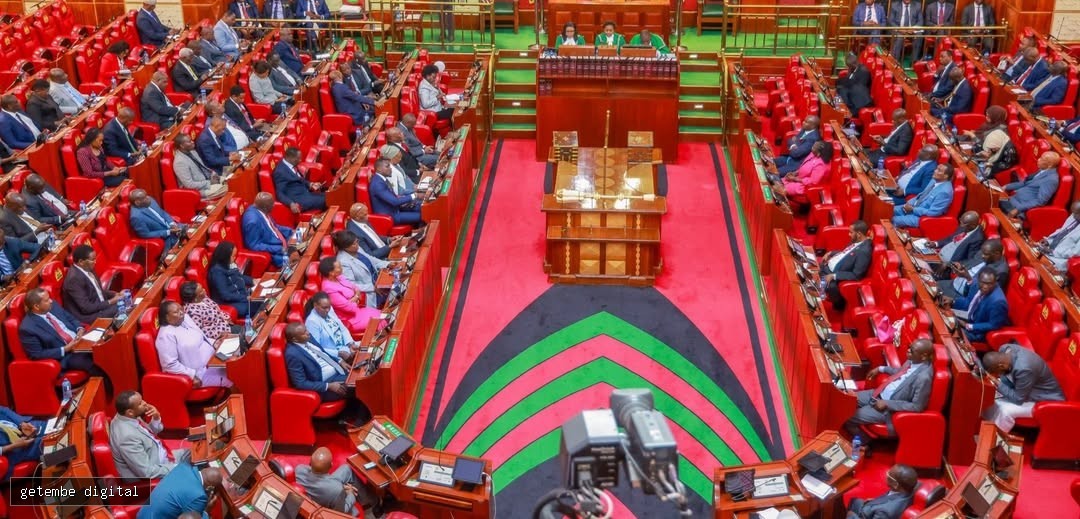
MPs have passed the Plant Protection Bill 2025, creating a legal framework to protect Kenya’s agricultural sector from plant pests and diseases.
Watch Getembe TV Live
Broadcast Getembe TV Live Stream
Listen Getembe FM Live
Tune in to Getembe FM Live Broadcast
The bill cleared the House following debate and third reading, marking a significant legislative step toward modernising the country’s plant health management system. Lawmakers described the measure as essential for safeguarding food security, protecting farmer livelihoods, and securing the competitiveness of Kenya’s agricultural exports in regional and international markets.
Agriculture remains the backbone of Kenya’s economy, contributing substantially to gross domestic product, employing a large share of the workforce, and generating critical foreign exchange through commodities such as tea, coffee, horticultural produce, and cut flowers. Recurrent outbreaks of pests and diseases have repeatedly undermined these gains, causing yield losses, increasing production costs, and occasionally triggering trade restrictions from key importing countries.
The Plant Protection Bill seeks to replace and update existing fragmented legislation with a more robust, science-based regime. It provides for stronger surveillance, early detection, and rapid response mechanisms against invasive species and endemic threats. Provisions cover the regulation of plant imports and exports, certification of planting material, control of the movement of potentially infected plants and plant products within the country, and the imposition of quarantine measures when necessary.
Central to the legislation is the strengthening of institutional capacity. The bill outlines clearer mandates for relevant government agencies responsible for plant health, including enhanced coordination between national and county governments. It also addresses the roles of research institutions, private sector actors, and farmers themselves in prevention and control efforts. Penalties for non-compliance, including illegal importation or failure to report outbreaks, are designed to deter practices that could introduce or spread harmful organisms.
During debate, several Members of Parliament highlighted the economic toll of past pest invasions. The fall armyworm, which first appeared in Kenya several years ago, continues to affect maize production in multiple counties. Desert locust swarms in previous seasons devastated crops and pasture across large parts of the country. Other persistent challenges include bacterial wilt in potatoes, coffee berry disease, fruit flies affecting mangoes and other horticultural crops, and various viral and fungal pathogens that reduce both quantity and quality of harvests.

Proponents of the bill argued that climate change has intensified these risks by altering pest distribution patterns, lengthening breeding seasons, and creating favourable conditions for the establishment of new invasive species. Rising global trade volumes and increased movement of people and goods further elevate the probability of pest introductions. Without updated legal tools, they said, Kenya risks falling behind regional partners in phytosanitary standards, potentially jeopardising access to lucrative markets in Europe, the Middle East, and Asia.
The legislation aligns with Kenya’s commitments under international agreements, including those administered by the International Plant Protection Convention and standards set by the World Trade Organization’s Agreement on the Application of Sanitary and Phytosanitary Measures. By strengthening domestic capacity for pest risk analysis, inspection, and certification, the bill is expected to facilitate smoother trade while protecting local production systems.
Opposition voices and some independent members raised concerns during deliberations about implementation capacity and potential burdens on smallholder farmers. Questions focused on the availability of technical personnel at county level, the cost of compliance for ordinary growers, and the need for adequate public awareness campaigns. Supporters countered that the bill includes provisions for stakeholder consultation, capacity building, and phased rollout, and that the long-term benefits of reduced crop losses would outweigh transitional challenges.

Agricultural stakeholders outside Parliament have broadly welcomed the development. Industry associations representing exporters of fresh produce have long called for stronger phytosanitary controls to maintain Kenya’s reputation as a reliable supplier. Farmer organisations have emphasised the need for accessible extension services and affordable control measures once the law takes effect. Research bodies have pointed to the importance of linking the new legal framework with ongoing breeding programmes for resistant varieties and integrated pest management strategies that reduce reliance on chemical pesticides.
The bill now proceeds to the Senate for consideration. Under Kenya’s bicameral legislative process, the Senate will debate and may propose amendments before the measure returns to the National Assembly for concurrence if necessary. Once both Houses agree on a final version, the bill will be presented to the President for assent. Upon becoming law, implementing regulations will be required to operationalise many of its detailed provisions, a process expected to involve further public participation.
The passage of the Plant Protection Bill comes amid broader government efforts to boost agricultural productivity and resilience under various national development frameworks. These include initiatives focused on climate-smart agriculture, expansion of irrigation, and value addition. Strengthening plant health systems is viewed as a foundational element, since even the most productive farming practices can be undermined by unchecked pest and disease pressure.
As the National Assembly completed its work on the bill on August 12, attention now shifts to the Senate and the subsequent stages of the legislative process. The measure represents one of the more significant updates to Kenya’s agricultural regulatory framework in recent years, reflecting growing recognition that plant health is inseparable from national economic and food security objectives.
Lawmakers who steered the bill through the House expressed optimism that, once enacted and properly implemented, the Plant Protection Act will equip Kenya with the legal and institutional tools needed to confront both familiar and emerging threats to its crops. In a country where millions depend directly on farming, the stakes of effective plant protection remain high.
Agriculture remains the backbone of Kenya’s economy, contributing substantially to gross domestic product, employing a large share of the workforce, and generating critical foreign exchange through commodities such as tea, coffee, horticultural produce, and cut flowers. Recurrent outbreaks of pests and diseases have repeatedly undermined these gains, causing yield losses, increasing production costs, and occasionally triggering trade restrictions from key importing countries.
The Plant Protection Bill seeks to replace and update existing fragmented legislation with a more robust, science-based regime. It provides for stronger surveillance, early detection, and rapid response mechanisms against invasive species and endemic threats. Provisions cover the regulation of plant imports and exports, certification of planting material, control of the movement of potentially infected plants and plant products within the country, and the imposition of quarantine measures when necessary.
Central to the legislation is the strengthening of institutional capacity. The bill outlines clearer mandates for relevant government agencies responsible for plant health, including enhanced coordination between national and county governments. It also addresses the roles of research institutions, private sector actors, and farmers themselves in prevention and control efforts. Penalties for non-compliance, including illegal importation or failure to report outbreaks, are designed to deter practices that could introduce or spread harmful organisms.
During debate, several Members of Parliament highlighted the economic toll of past pest invasions. The fall armyworm, which first appeared in Kenya several years ago, continues to affect maize production in multiple counties. Desert locust swarms in previous seasons devastated crops and pasture across large parts of the country. Other persistent challenges include bacterial wilt in potatoes, coffee berry disease, fruit flies affecting mangoes and other horticultural crops, and various viral and fungal pathogens that reduce both quantity and quality of harvests.
Proponents of the bill argued that climate change has intensified these risks by altering pest distribution patterns, lengthening breeding seasons, and creating favourable conditions for the establishment of new invasive species. Rising global trade volumes and increased movement of people and goods further elevate the probability of pest introductions. Without updated legal tools, they said, Kenya risks falling behind regional partners in phytosanitary standards, potentially jeopardising access to lucrative markets in Europe, the Middle East, and Asia.
The legislation aligns with Kenya’s commitments under international agreements, including those administered by the International Plant Protection Convention and standards set by the World Trade Organization’s Agreement on the Application of Sanitary and Phytosanitary Measures. By strengthening domestic capacity for pest risk analysis, inspection, and certification, the bill is expected to facilitate smoother trade while protecting local production systems.
Opposition voices and some independent members raised concerns during deliberations about implementation capacity and potential burdens on smallholder farmers. Questions focused on the availability of technical personnel at county level, the cost of compliance for ordinary growers, and the need for adequate public awareness campaigns. Supporters countered that the bill includes provisions for stakeholder consultation, capacity building, and phased rollout, and that the long-term benefits of reduced crop losses would outweigh transitional challenges.
Agricultural stakeholders outside Parliament have broadly welcomed the development. Industry associations representing exporters of fresh produce have long called for stronger phytosanitary controls to maintain Kenya’s reputation as a reliable supplier. Farmer organisations have emphasised the need for accessible extension services and affordable control measures once the law takes effect. Research bodies have pointed to the importance of linking the new legal framework with ongoing breeding programmes for resistant varieties and integrated pest management strategies that reduce reliance on chemical pesticides.
The bill now proceeds to the Senate for consideration. Under Kenya’s bicameral legislative process, the Senate will debate and may propose amendments before the measure returns to the National Assembly for concurrence if necessary. Once both Houses agree on a final version, the bill will be presented to the President for assent. Upon becoming law, implementing regulations will be required to operationalise many of its detailed provisions, a process expected to involve further public participation.
The passage of the Plant Protection Bill comes amid broader government efforts to boost agricultural productivity and resilience under various national development frameworks. These include initiatives focused on climate-smart agriculture, expansion of irrigation, and value addition. Strengthening plant health systems is viewed as a foundational element, since even the most productive farming practices can be undermined by unchecked pest and disease pressure.
As the National Assembly completed its work on the bill on August 12, attention now shifts to the Senate and the subsequent stages of the legislative process. The measure represents one of the more significant updates to Kenya’s agricultural regulatory framework in recent years, reflecting growing recognition that plant health is inseparable from national economic and food security objectives.
Lawmakers who steered the bill through the House expressed optimism that, once enacted and properly implemented, the Plant Protection Act will equip Kenya with the legal and institutional tools needed to confront both familiar and emerging threats to its crops. In a country where millions depend directly on farming, the stakes of effective plant protection remain high.
ADVERTISEMENT
Watch Getembe TV Live
Broadcast Getembe TV Live Stream
Listen Getembe FM Live
Tune in to Getembe FM Live Broadcast
How do you feel about this article?
Let us know by choosing a reaction below.
#kenya
#KenyaPolitics
#BreakingNews
#Parliament
#KenyaNews
#Development
#KenyaAgriculture
#PlantProtectionBill
#NationalAssembly
#Agriculture
#FoodSecurity
#Farmers
#AgriculturalDevelopment
#FoodProduction
#AgricultureNews
#FarmersRights
#PlantHealth
#FoodSafety
#AgriculturalPolicy
#NationalAssemblyKE

Comments 0
Please log in to participate in the comments section.
No comments yet. Be the first to share your thoughts!
ADVERTISEMENT
Related Stories


Have a news tip?
Do you have an investigation, local story or news event you think we should cover? Contact our newsroom directly.
Submit Tip
Mobile App
Download Getembe Digital App Today
Download Getembe Digital App today for live news updates, breaking notifications, and seamless live streaming.