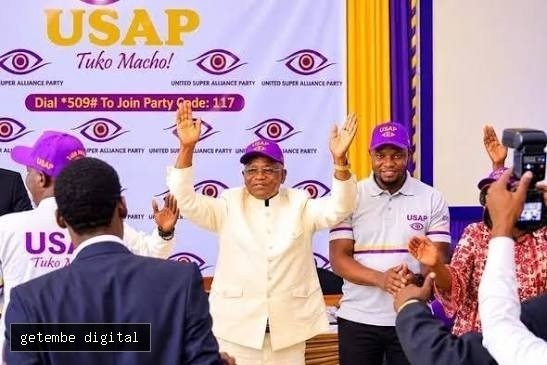
“WHEN I GIVE, I GIVE TO GOD”: RUTO DOUBLES DOWN ON CHURCH DONATIONS DESPITE CLERGY PUSHBACK
Ruto says he will keep building churches without permission. But the State House chapel still raises questions about faith, funding and the Constitution.

Watch Getembe TV Live
Broadcast Getembe TV Live Stream
Listen Getembe FM Live
Tune in to Getembe FM Live Broadcast
President William Ruto has renewed his defence of church construction and financial contributions to religious institutions, insisting that he will continue supporting churches despite criticism and resistance from some religious leaders.
Speaking on Sunday, November 8, 2026, during an interdenominational service at Nyamaiya Stadium in Nyamira County, Ruto defended his contributions to churches after a preacher urged him to redirect donations that had been rejected by some clergy to local churches.

The President maintained that his contributions were voluntary and should not be interpreted as attempts to influence religious leaders, arguing that supporting the church was an expression of faith rather than an act requiring approval from others.
“We will continue building churches and we do not ask anyone for permission. We build voluntarily. I have not given money to any person; when I give, I give to God,” Ruto said.
He also questioned why some clergy had returned his donations, arguing that individuals should not position themselves as gatekeepers over contributions intended for religious purposes.
His remarks come amid continued debate over his involvement in church construction, particularly the controversial chapel being built within the State House compound in Nairobi.
The project first attracted public attention in July 2025 after architectural designs published by the Daily Nation showed plans for a substantial permanent church featuring twin crosses and tall windows. Initial reports placed its estimated cost at approximately KSh1.2 billion, with a proposed capacity of up to 8,000 worshippers.
Ruto subsequently confirmed the construction but dismissed the reported cost as propaganda, explaining that he had inherited a small iron-sheet chapel when he assumed office and wanted to replace it with a permanent structure.

He argued that the facility was intended primarily for the approximately 300 people working and living at State House, adding that its construction would be financed through personal contributions and support from friends rather than public funds.
The President revisited the controversy in May 2026 while hosting faith leaders from Bungoma County at State House, where he defended the need to replace the existing iron-sheet structure.
“We have a small iron-sheet church. This building was not here. I came and built it,” he said.
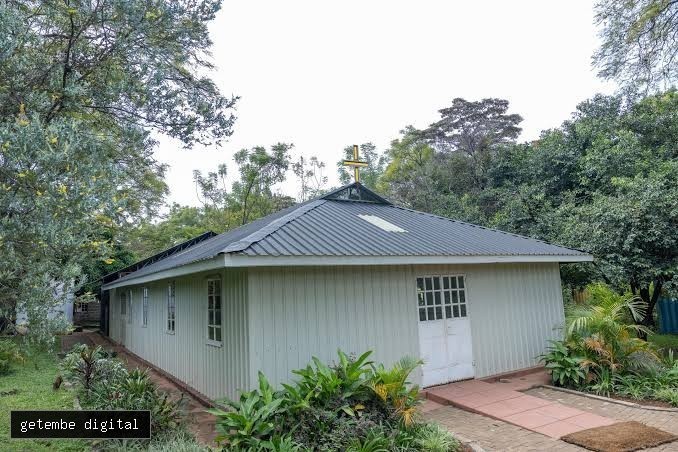
Pointing towards the construction site, Ruto added that the chapel would soon be completed, describing it as a facility for State House workers.
“Hatuwezi kuwa na kanisa ya mabati State House. Ni aibu,” he said, arguing that having an iron-sheet church within the official presidential residence was embarrassing.
However, the project has faced legal challenges over constitutional concerns surrounding the construction of a permanent religious facility on state property.
In August 2025, the High Court issued temporary conservatory orders restraining the construction of a permanent religious structure at State House or other state lodges pending the determination of petitions challenging the project.
The petitions raised questions about the relationship between religion and the state, particularly in light of Article 8 of the Constitution, which declares that there shall be no state religion in Kenya.
Although Ruto has consistently maintained that the chapel is a private undertaking and will not be financed using public resources, the controversy has continued to raise questions about the use of public property for religious purposes.
His latest remarks in Nyamira therefore bring the debate back into focus, with the President showing no indication that criticism from sections of the clergy or the wider public will change his position on supporting church construction.
At the centre of the controversy is a distinction that continues to attract public attention: while Ruto maintains that his religious contributions are personal acts of faith, questions surrounding the State House chapel extend beyond the source of its funding to the constitutional implications of constructing a permanent place of worship on state property.
ADVERTISEMENT
Watch Getembe TV Live
Broadcast Getembe TV Live Stream
Listen Getembe FM Live
Tune in to Getembe FM Live Broadcast
How do you feel about this article?
Let us know by choosing a reaction below.

Written by FRANKLINE NYANDORO
Reporter and staff writer at Getembe News.
Comments 0
Please log in to participate in the comments section.
No comments yet. Be the first to share your thoughts!
ADVERTISEMENT
Related Stories
Have a news tip?
Do you have an investigation, local story or news event you think we should cover? Contact our newsroom directly.
Submit Tip
Mobile App
Download Getembe Digital App Today
Download Getembe Digital App today for live news updates, breaking notifications, and seamless live streaming.