
KALONZO'S MATIANG'I AND ORENGO APPOINTMENTS: A UNITED OPPOSITION THAT IS INCREASINGLY LOOKING DIVIDED
Kalonzo says relax, a Super Alliance is coming. But can appointments to the Ukombozi Council settle the opposition’s deeper fight over leadership and ambition?
Watch Getembe TV Live
Broadcast Getembe TV Live Stream
Listen Getembe FM Live
Tune in to Getembe FM Live Broadcast
Wiper Party leader Kalonzo Musyoka has made another attempt to convince Kenyans that the opposition is putting its house in order ahead of the 2027 General Election. His latest move, appointing Jubilee Party leader Fred Matiang'i and Siaya Governor James Orengo to jointly chair the Ukombozi Alliance Council, is being presented as a major step towards building a formidable political alternative to President William Ruto.
But beneath the announcement lies a much bigger political question: Can an opposition struggling to agree on its own leadership genuinely convince Kenyans that it is ready to lead the country together?
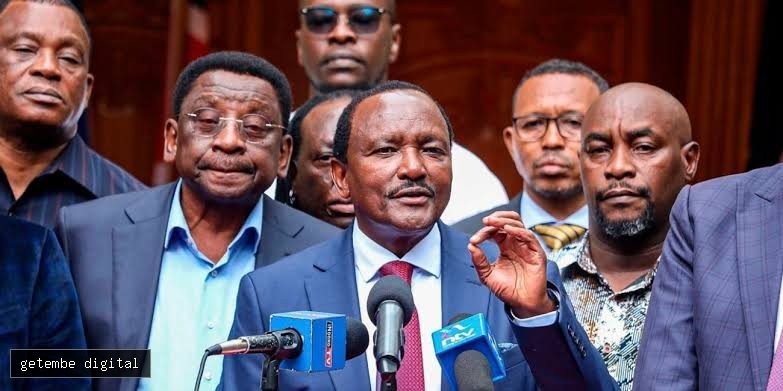
Kalonzo announced the appointments on Thursday, November 5, upon arriving at Kisumu International Airport ahead of his political tour of Migori and Homa Bay counties. He was accompanied by Democratic Party leader Justin Muturi, DAP-Kenya leader Eugene Wamalwa and other Wiper officials.
In reassuring Kenyans about the state of opposition unity, Kalonzo asked the public to relax, insisting that a Super Alliance was in the making.
He argued that bringing Matiang'i and Orengo together would strengthen the coalition, citing the former Interior Cabinet Secretary's experience in government and Orengo's long-standing involvement in Kenya's democratic and constitutional struggles.
On paper, the appointments bring together two politicians with different but significant political backgrounds. Matiang'i understands the workings of the executive, having served in several Cabinet positions under former President Uhuru Kenyatta, while Orengo has spent decades in opposition politics, constitutional reform and public administration.
However, the real significance of these appointments may have less to do with their individual credentials and more to do with the political circumstances surrounding the formation they are expected to help coordinate.
For months, Kenyans have watched opposition leaders present a united front against President Ruto, promising to put aside their differences and agree on a common presidential candidate.
Yet, as the 2027 elections draw closer, the cracks are becoming increasingly difficult to conceal.
One of the most visible disagreements has been between former Deputy President Rigathi Gachagua and Matiang'i over how the opposition should organise itself and determine its leadership.
Gachagua's proposal to consolidate Mt Kenya, Western and Ukambani into a three-bloc political arrangement exposed competing ideas about coalition building. Matiang'i, on the other hand, has cautioned against reducing the country's political future to ethnic arithmetic, arguing that the presidential candidate should emerge from a process driven by Kenyans rather than decisions imposed by individual political leaders.
The disagreement was not merely about strategy. It exposed a deeper question about who gets to determine the direction of the opposition and whose political influence should count most during negotiations.
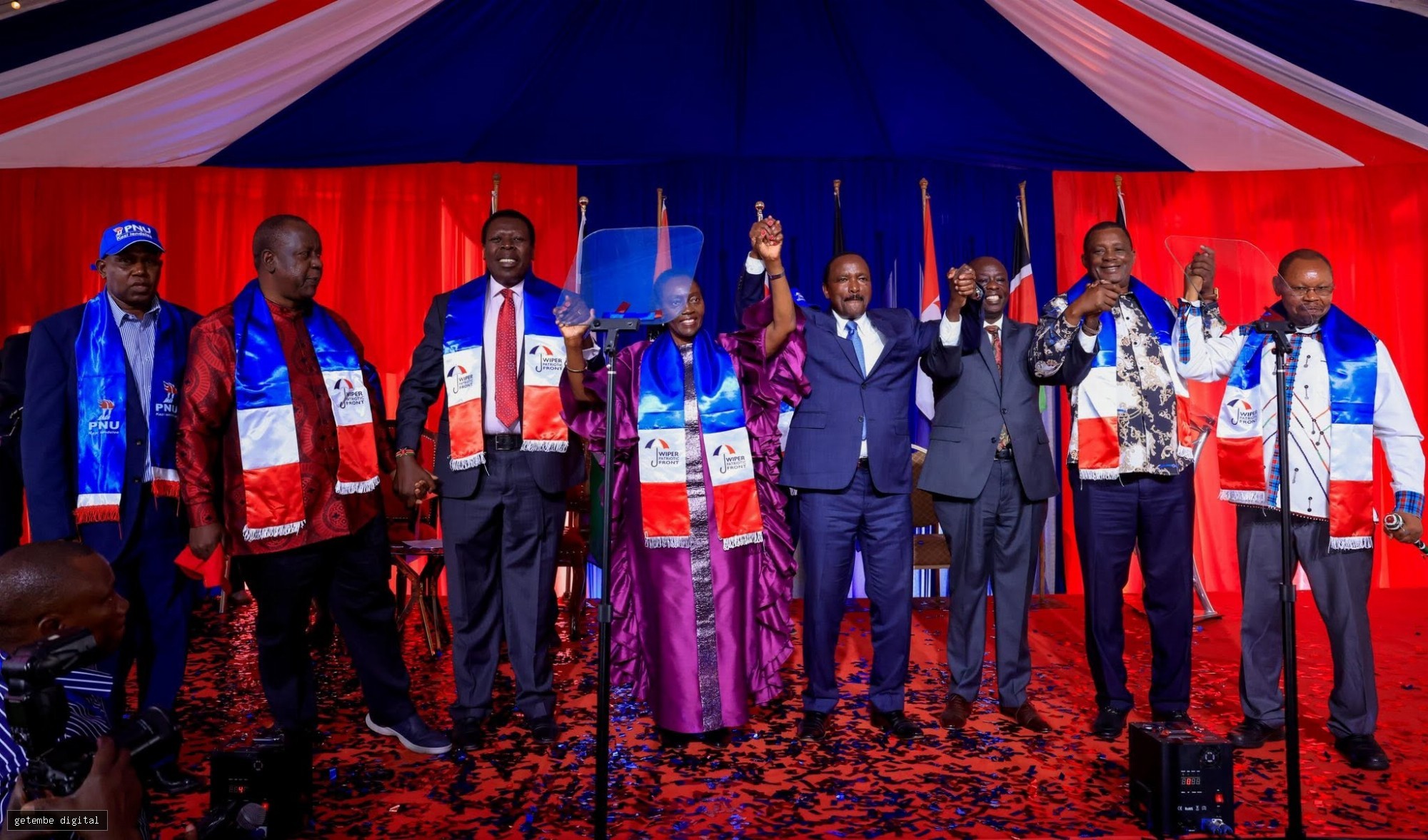
There have also been increasingly visible differences in the political engagements of opposition leaders. While Gachagua, Kalonzo, Edwin Sifuna and Wamalwa have pursued joint political appearances, another grouping involving Matiang'i, Martha Karua and Ndindi Nyoro has held separate engagements.
These developments have raised questions about whether the opposition is still operating as one political formation or gradually developing competing centres of power.
And that is where Kalonzo's latest appointments become particularly interesting.
By placing Matiang'i and Orengo at the helm of the Ukombozi Alliance Council, Kalonzo is bringing influential political figures into a structure that he has been actively popularising.
The decision also comes after former President Uhuru Kenyatta's departure from the alliance leadership, creating an opportunity for a new leadership arrangement.
The question, however, is whether Ukombozi will eventually become the common political home for all opposition leaders or remain one of several competing platforms seeking to shape the 2027 political contest.
There is an important distinction between building an alliance and building a coalition that everyone is willing to submit to.
Gachagua has his own political base and ambitions. Kalonzo has spent years pursuing the presidency and has his own established political machinery. Matiang'i is positioning himself within the national opposition conversation, while Karua, Sifuna, Nyoro and other leaders have their own political interests and constituencies.
These are not minor considerations that can be resolved through appointments to a council.
The opposition must eventually confront the question of whether its leaders are prepared to support a presidential candidate other than themselves, and whether those who mobilise political support will be comfortable with the eventual distribution of political influence and government positions.
Until that conversation is settled, declarations of unity will continue to face the test of competing political interests.
Perhaps the greatest challenge facing the opposition is that its political identity is increasingly defined by its desire to remove President Ruto rather than a clearly articulated alternative programme for governing Kenya.
Opposing an incumbent is one thing. Convincing millions of Kenyans that you have a workable alternative is another.
Kalonzo's language about rescuing the country from what he calls a predatory regime may resonate with sections of the electorate, but Kenyans will eventually want to know what the opposition intends to do differently.
What is its economic recovery plan? How does it intend to address unemployment, taxation, public debt, corruption and the rising cost of living? What kind of government does it intend to establish, and how will it ensure that coalition partners do not turn public appointments into rewards for political loyalty?
These are questions that require more than political rallies and statements about unity.
The opposition also needs to demonstrate that its internal democratic processes are credible. If its leaders cannot agree on how to choose a presidential candidate, why should Kenyans assume that they will easily agree on how to run a government?
Kalonzo's decision to bring Matiang'i and Orengo together may help strengthen the organisational structures of the Ukombozi Alliance. It also offers an opportunity to bring different political experiences into one decision-making platform.
But it does not automatically settle the divisions within the wider opposition.
The coming months will reveal whether these leaders are genuinely prepared to negotiate, compromise and work under a common political programme or whether the opposition will continue operating through competing alliances that only converge when facing the government.
For now, Kalonzo is asking Kenyans to relax because a Super Alliance is in the making.
But perhaps the bigger question is whether the opposition itself can relax its individual presidential ambitions long enough to build one.
Because defeating an incumbent requires political numbers, but building a government requires political agreement. And that is precisely where the opposition still has some unfinished business.
ADVERTISEMENT
Watch Getembe TV Live
Broadcast Getembe TV Live Stream
Listen Getembe FM Live
Tune in to Getembe FM Live Broadcast
How do you feel about this article?
Let us know by choosing a reaction below.

Written by FRANKLINE NYANDORO
Reporter and staff writer at Getembe News.
Comments 0
Please log in to participate in the comments section.
No comments yet. Be the first to share your thoughts!
ADVERTISEMENT
Related Stories
Have a news tip?
Do you have an investigation, local story or news event you think we should cover? Contact our newsroom directly.
Submit Tip
Mobile App
Download Getembe Digital App Today
Download Getembe Digital App today for live news updates, breaking notifications, and seamless live streaming.