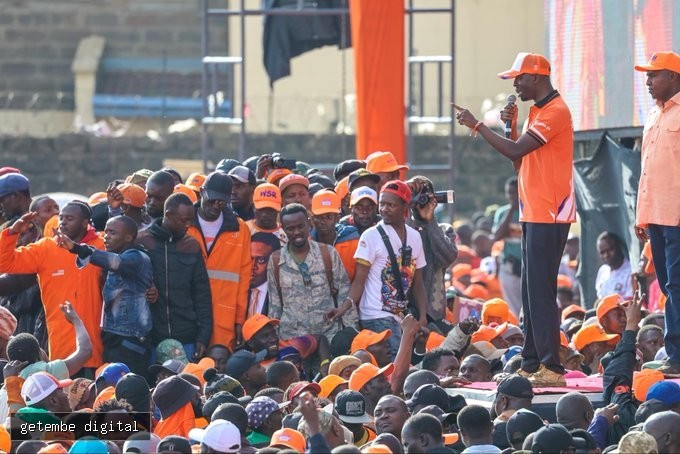
TAXED AT THE PUMP, STRANDED ON THE ROAD: KENYA'S INFRASTRUCTURE PARADOX
Motorists pay KSh25 per litre for road upkeep, but the Auditor-General questions how KSh175 billion in future levy collections is being used. Are Kenyans paying twice for bad roads?
Watch Getembe TV Live
Broadcast Getembe TV Live Stream
Listen Getembe FM Live
Tune in to Getembe FM Live Broadcast
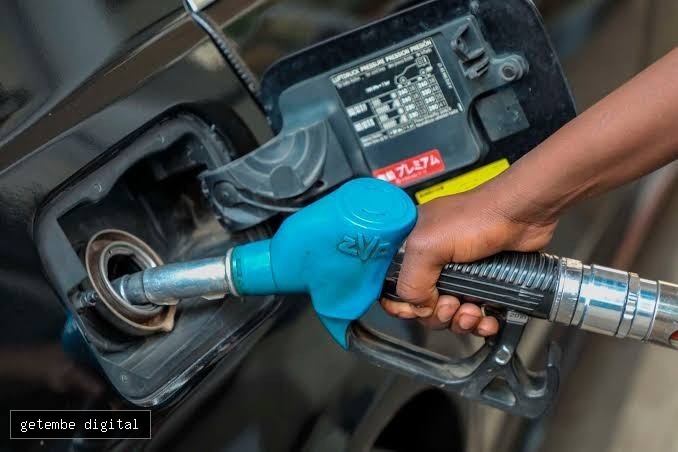
Every time a Kenyan motorist purchases petrol or diesel, KSh25 per litre goes towards the Road Maintenance Levy Fund (RMLF). The principle behind the levy is straightforward: motorists contribute towards maintaining the country's roads, and the money collected should translate into safer, more reliable transport infrastructure.
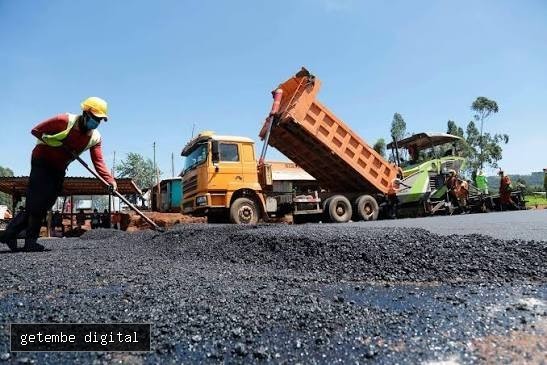
But what happens when money raised for road maintenance is redirected to meet other government financial obligations?
That is the uncomfortable question emerging from the Auditor-General's findings on the securitisation of the Road Maintenance Levy Fund, which have exposed serious concerns about how a dedicated infrastructure revenue stream is being managed.
The issue is bigger than an accounting dispute. It touches on the relationship between taxation, public accountability and the government's responsibility to ensure that money collected for a specific purpose actually serves that purpose.
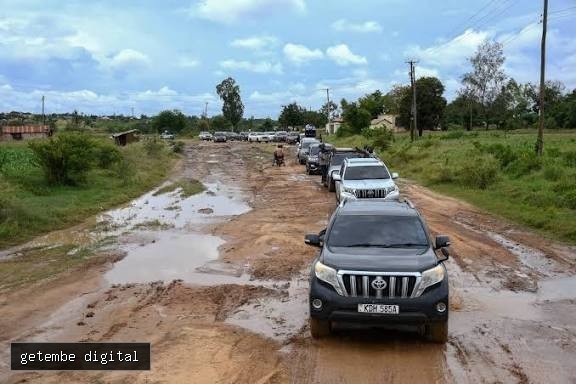
For ordinary Kenyans, the contradiction is difficult to ignore. Motorists continue paying the levy, yet many roads remain riddled with potholes, transport operators spend heavily on vehicle repairs, and rural communities struggle with unreliable access roads.
The government is collecting money in the name of road maintenance, but questions are emerging about whether those resources are being used to address the very infrastructure challenges that justify the levy.
In her audit report for the financial year ended June 2025, Auditor-General Nancy Gathungu raised concerns over the securitisation of KSh175 billion from the Road Maintenance Levy Fund to facilitate the settlement of government pending bills.

Securitisation allows the government to access financing against anticipated future revenue. In this case, future collections from the fuel levy were used to support a financing arrangement intended to clear outstanding obligations.
The concern is not merely that the government has borrowed against future revenue. It is whether such arrangements undermine the statutory purpose of the levy and leave road maintenance programmes with fewer resources in subsequent years.
The audit also questioned a KSh7.31 billion payment to a French consortium following the cancellation of the Nairobi-Nakuru-Mau Summit highway project.
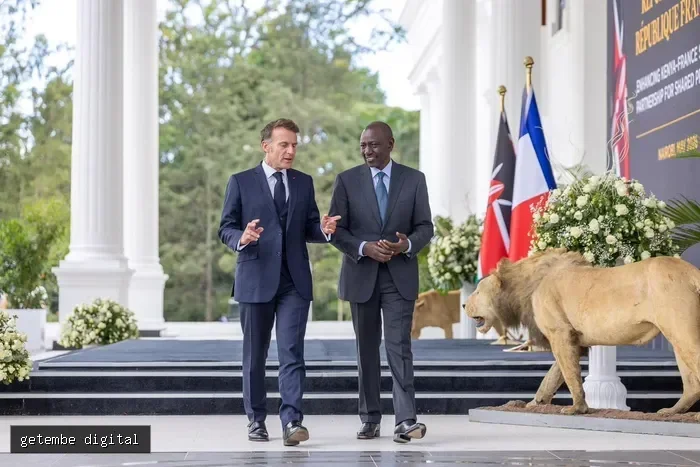
The payment was charged to the securitisation facility intended to settle pending bills owed to road contractors, prompting questions about whether it qualified under the facility's intended purpose.
The payment was charged to the securitisation facility intended to settle pending bills owed to road contractors, prompting questions about whether it qualified under the facility's intended purpose.
These revelations expose the danger of treating dedicated public funds as convenient sources of financing whenever the government encounters fiscal pressure.
A levy is not an ordinary tax whose purpose can be casually changed whenever competing expenditure demands arise. Its statutory designation creates an expectation that the revenue will support the function for which it was established.
If future collections are committed to settling obligations today, the government must explain how it intends to protect the maintenance programmes that depend on those same revenues tomorrow.
The economic consequences of poor road maintenance are not abstract.
For matatu operators, damaged roads translate into frequent suspension repairs, tyre replacements and increased vehicle maintenance costs. These expenses eventually affect operating profits and can contribute to higher passenger fares.
Farmers also bear the consequences. Poor rural roads increase the cost of transporting agricultural produce, delay deliveries and make market access difficult, particularly during rainy seasons.
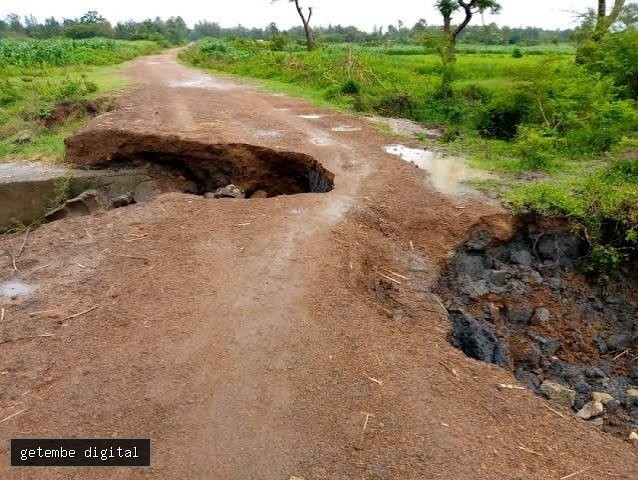
Businesses face additional logistical expenses, while ordinary commuters lose valuable time navigating deteriorating roads.
This creates an unfair economic arrangement in which motorists contribute through the fuel levy but continue paying additional costs because the infrastructure is not adequately maintained.
In effect, Kenyans are paying for road maintenance at the pump and paying again through vehicle repairs, transport fares and the wider economic consequences of poor connectivity.
The government cannot reasonably expect citizens to accept increasing taxation while offering limited evidence of corresponding improvements in public infrastructure.
The controversy also raises questions about the distribution of road maintenance resources between national and county governments.
In June 2025, the High Court ruled that excluding counties from the Road Maintenance Levy Fund was unconstitutional and ordered the restoration of a KSh10.5 billion conditional grant for county road maintenance.
In May 2026, the government proposed allocating 15.02 per cent of projected RMLF collections to counties, with the remaining 84.98 per cent going towards national roads.
This is an important development because the country's road network is not made up of highways alone.
A farmer in Kisii depends just as much on a functional rural access road as a long-distance truck driver depends on a national highway. Urban businesses, traders and commuters also rely on local roads to sustain economic activity.
County governments must therefore receive predictable funding to fulfil their constitutional responsibilities.
However, allocating money on paper is not enough. The government must demonstrate that the resources are actually released, properly utilised and reflected in improved road conditions.
The National Treasury cannot escape scrutiny by presenting securitisation as a financial management arrangement.
Parliament must establish the legal basis for committing future fuel levy collections, examine the KSh175 billion financing arrangement and determine its implications for road maintenance budgets.
The government must also disclose how much of the levy is collected, how much is committed to debt obligations, how much reaches road agencies and what remains available for actual maintenance.
Most importantly, statutory funds must be protected from becoming convenient instruments for financing unrelated government obligations without adequate legislative scrutiny and public accountability.
Kenya's infrastructure challenge is not simply about raising more money. It is about ensuring that the money already collected delivers the intended public benefit.
A government that asks motorists to contribute KSh25 for every litre of fuel must be prepared to explain why the roads they use remain in such poor condition.
The Road Maintenance Levy was never supposed to be another financial lifeline for an increasingly indebted government. It was established to maintain roads.
If motorists continue financing government obligations through future levy collections while bearing the cost of deteriorating infrastructure, then the country must seriously reconsider how its dedicated public funds are protected.
Kenyans should not have to finance the government's debts at the fuel pump while paying out of their own pockets to survive the roads.
ADVERTISEMENT
Watch Getembe TV Live
Broadcast Getembe TV Live Stream
Listen Getembe FM Live
Tune in to Getembe FM Live Broadcast
How do you feel about this article?
Let us know by choosing a reaction below.

Written by FRANKLINE NYANDORO
Reporter and staff writer at Getembe News.
Comments 0
Please log in to participate in the comments section.
No comments yet. Be the first to share your thoughts!
ADVERTISEMENT
Related Stories

Have a news tip?
Do you have an investigation, local story or news event you think we should cover? Contact our newsroom directly.
Submit Tip
Mobile App
Download Getembe Digital App Today
Download Getembe Digital App today for live news updates, breaking notifications, and seamless live streaming.