
WHY GACHAGUA AND KALONZO NEED MATIANG’I: THE JUBILEE FACTOR IN THE OPPOSITION’S RECONCILIATION
Gachagua, Kalonzo and Matiang’i have patched things up, but with Jubilee behind him, Matiang’i holds real leverage. Who gets the ticket remains the real test.

Watch Getembe TV Live
Broadcast Getembe TV Live Stream
Listen Getembe FM Live
Tune in to Getembe FM Live Broadcast
Kenyan opposition politics is increasingly becoming a contest of personalities, political parties and, perhaps more importantly, who has the strongest negotiating position ahead of the 2027 General Election. But the latest reconciliation between Rigathi Gachagua, Kalonzo Musyoka and Fred Matiang’i raises an interesting question: Why are two of the opposition's most influential political figures suddenly keen to maintain a working relationship with a man Gachagua had only recently subjected to some of his harshest political criticism?

On November 8, 2026, the three leaders met in Nairobi in what appeared to be an attempt to contain growing disagreements within the opposition. The meeting came just days after Matiang’i openly challenged Gachagua's proposed three-bloc political arrangement, describing it as majoritarian arrogance that could ultimately undermine the opposition's attempts to build a united front.
Gachagua had, in turn, questioned the contribution of some opposition principals, suggesting that certain leaders expected to benefit from political mobilisation without putting in the work themselves.
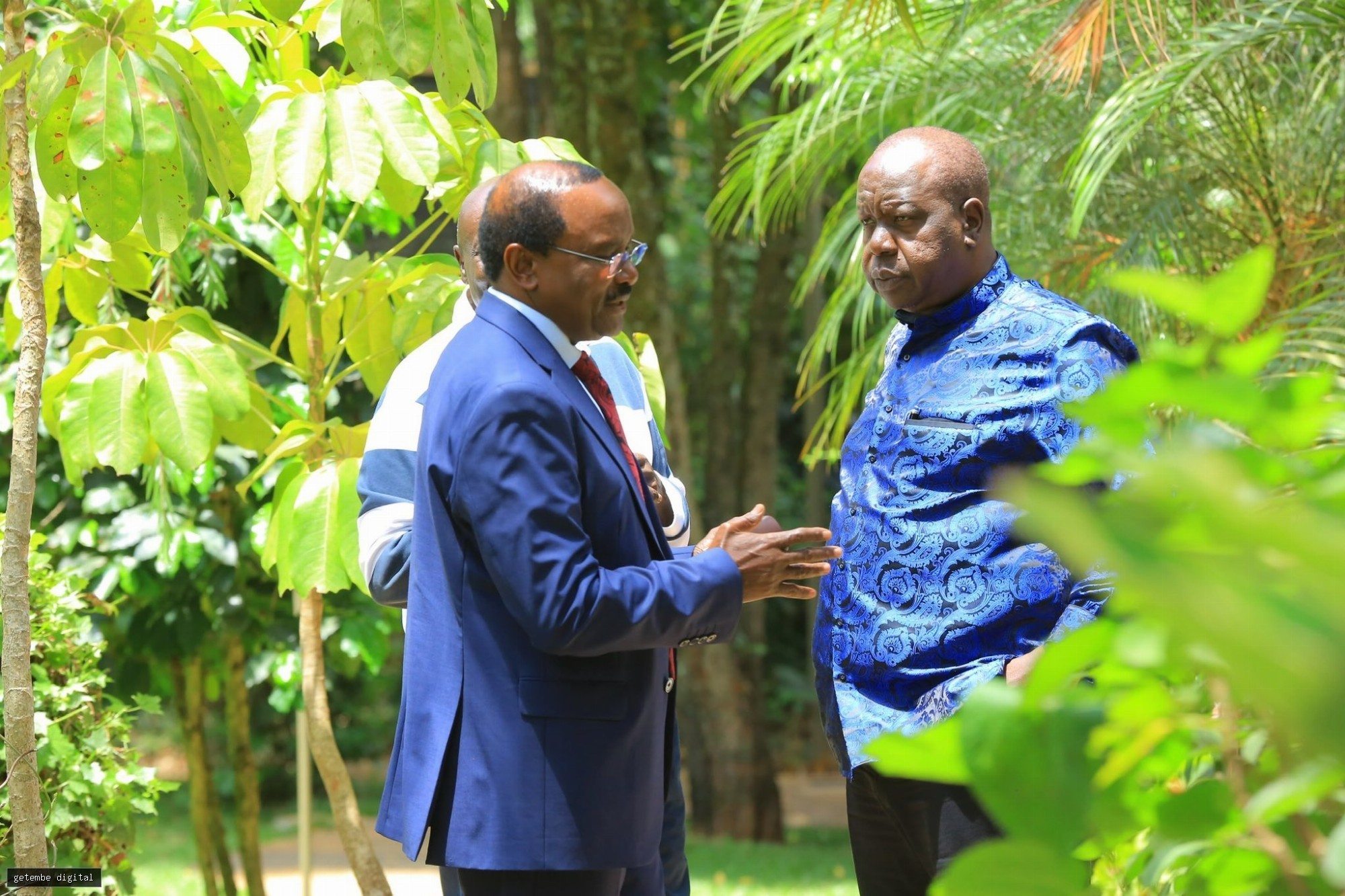
It was an uncomfortable exchange, particularly considering that all three leaders are supposedly working towards the same political objective: presenting a formidable challenge to President William Ruto in 2027.
Yet, following their meeting, the language changed. Gachagua spoke of commitment to a single presidential candidate, while Matiang’i shared photographs of the meeting with the caption, "Brothers will always put Kenya first."
But perhaps the most interesting aspect of this reconciliation is not the handshake itself. It is what Matiang’i brings to the negotiating table that makes his continued presence in the opposition increasingly important.
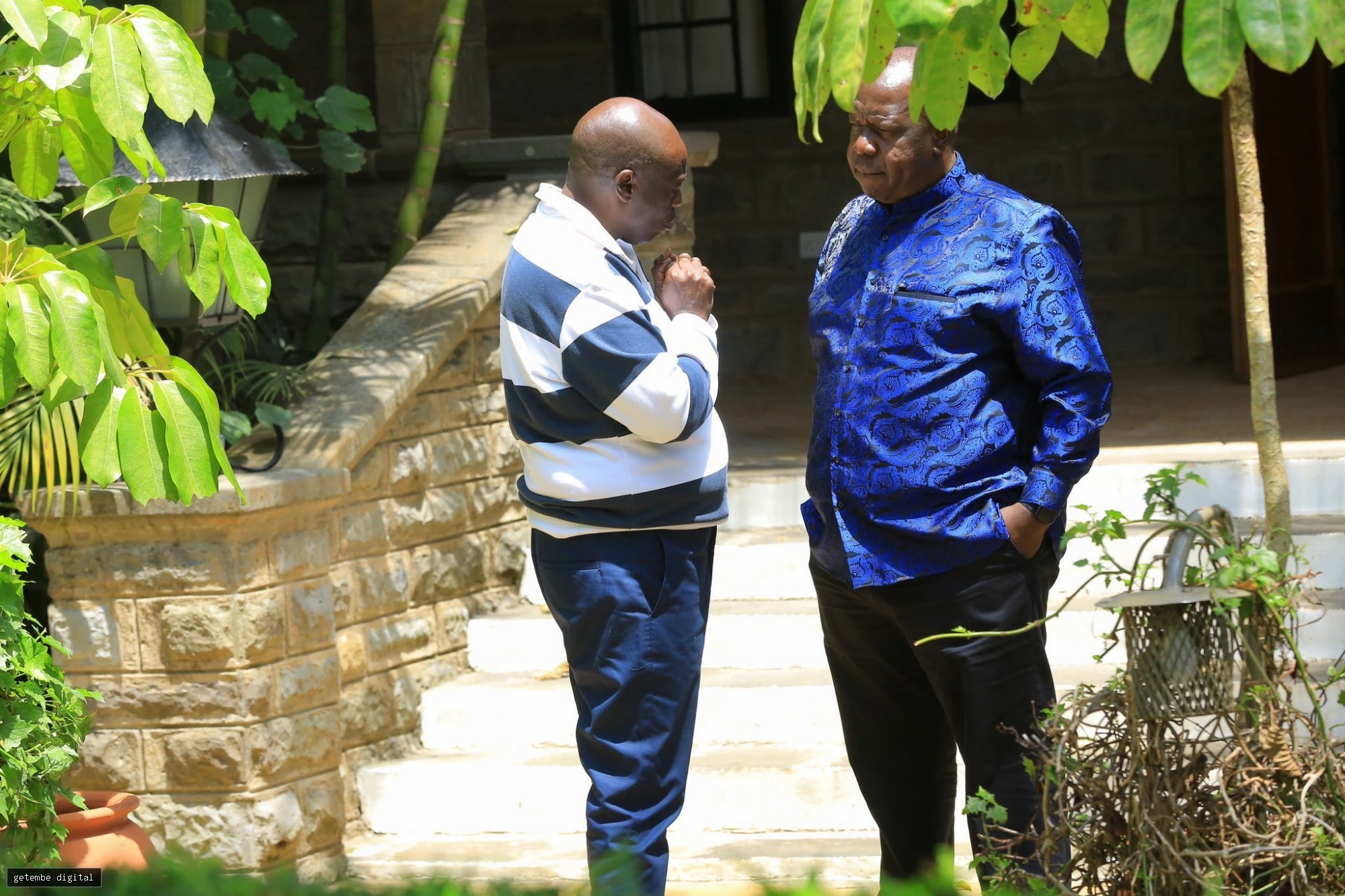
One thing that appears to be overlooked in the ongoing opposition negotiations is that Fred Matiang’i is not simply another politician looking for a political home.
He comes with Jubilee, a party that governed Kenya for two consecutive terms under Uhuru Kenyatta and still carries the institutional identity, political networks and national recognition of a former ruling party.
Unlike politicians whose political influence is largely built around individual movements or regional alliances, Matiang’i has an established political vehicle through which he can pursue his ambitions.
Jubilee's National Executive Committee endorsed him as its presidential candidate in October 2025, formally placing him at the centre of the party's 2027 political plans.
His position became even more significant in September 2026 when Uhuru Kenyatta relinquished the formal party leadership following a High Court ruling, paving the way for Matiang’i to assume a more prominent leadership role.
This is an important distinction.
Matiang’i is not approaching coalition negotiations merely as someone who wants to be considered for a government appointment. He already has a party that has declared its intention to present him for the presidency.
Of course, Jubilee has its own internal leadership disagreements, particularly involving Secretary-General Jeremiah Kioni and the question of who should succeed Uhuru as party leader. That means Matiang’i's political platform still has internal questions to resolve.
Nevertheless, the party's history, structures and national identity give him an independent bargaining platform.
The opposition's biggest challenge is no longer simply bringing together politicians who oppose the current administration. It is finding a formula through which leaders with presidential ambitions can coexist without feeling politically diminished.
Gachagua has been particularly vocal about his belief that political negotiations must recognise the numerical strength of individual regions. His proposed arrangement involving Mt Kenya, Ukambani and Western Kenya was an attempt to organise the opposition around what he considers significant electoral constituencies.
But Matiang’i's objection exposed a weakness in that approach.
Where does Jubilee fit into an arrangement that appears to allocate political influence according to regional blocs? And what happens to a presidential hopeful who already leads a party with its own ambitions and political structures?
Matiang’i's presence makes the negotiations more complicated because he cannot simply be treated as another politician waiting to be allocated a political position.
He has a presidential ambition, a party that has endorsed him and the ability to explore political arrangements outside the immediate Gachagua-Kalonzo partnership.
Indeed, The Star reported on November 8 that concerns about Matiang’i potentially pursuing alternative political arrangements, including a possible partnership with Ndindi Nyoro's People's Party of Kenya, contributed to the urgency of retaining him within the opposition framework.
That is an important consideration.
If Matiang’i feels that his ambitions are being sidelined, he has another political platform from which to negotiate. The opposition therefore risks turning a potential coalition partner into an independent political competitor.
For Kalonzo, the calculation is equally significant.
He has been positioning himself as a central figure in the broader opposition negotiations and recently unveiled the Ukombozi Alliance as a vehicle for bringing different opposition leaders together.
The Star reported that Matiang’i was among the leaders considered for the alliance's leadership council, alongside Siaya Governor James Orengo.
This suggests that Kalonzo's approach is not simply about maintaining friendships. It is about building an arrangement broad enough to accommodate leaders who have their own political bases and ambitions.
Gachagua, meanwhile, cannot afford to assume that his influence within Mt Kenya automatically gives him the authority to determine the direction of the entire opposition.
The reconciliation may therefore be an acknowledgement that the opposition needs more than regional arithmetic to negotiate a national political arrangement.
This is perhaps the most interesting question arising from the latest developments.
There is a difference between inviting someone into a political arrangement and negotiating with someone who already has an independent political platform.
Matiang’i falls into the latter category.
His Jubilee presidential endorsement gives him a legitimate basis to demand consideration in the opposition's eventual presidential selection process.
He is not necessarily required to abandon his party's ambitions simply because another coalition partner believes they command a larger voting bloc.
In fact, his criticism of Gachagua's majoritarian approach suggests that he wants the opposition to establish a system in which leadership is determined by broader considerations, rather than the numerical strength individual politicians claim to command.
Matiang’i has also publicly indicated that he would support any opposition candidate selected through an inclusive and mutually acceptable process.
That statement is significant because it leaves the door open for negotiations without requiring him to abandon his own presidential ambition prematurely.
However, there is a delicate balance here.
If he eventually agrees to support Kalonzo or Gachagua, what does Jubilee receive in return? Is there an agreed political framework for power-sharing, or is the expectation that Matiang’i will simply bring his party into a larger arrangement and accept whatever position is offered?
The distinction matters because Jubilee is not just an individual politician's personal movement. It is a political party with its own history, structures, members and ambitions.
A coalition that expects Matiang’i to surrender his independent political standing without a clearly negotiated agreement risks creating another source of disagreement.
For all the public declarations about unity, the opposition's central problem remains unresolved: who will carry the presidential ticket?
Gachagua has maintained that he is still in the race. Kalonzo has his own long-standing presidential ambitions, while Matiang’i has already received Jubilee's endorsement.
These are not minor differences that can be settled through a breakfast meeting or a joint political rally.
They represent competing political ambitions that will eventually require a transparent and acceptable mechanism for determining the coalition's candidate.
The question becomes even more complicated when one considers the interests of other opposition figures, including Edwin Sifuna, Martha Karua, Eugene Wamalwa and Justin Muturi.
Gachagua and Kalonzo's November 8 declaration that the opposition will eventually present one presidential candidate is an important political commitment. However, agreeing to have one candidate is considerably easier than agreeing on who that candidate should be.
And this is where Matiang’i's Jubilee platform becomes important.
He has an option beyond simply accepting the political calculations of the other principals. He can negotiate as the leader of a party that has already expressed its presidential preference.
The opposition must therefore decide whether it is building a coalition of equal political partners or an arrangement in which the strongest individual personalities determine who gets what.
The reconciliation between Gachagua, Kalonzo and Matiang’i may have eased immediate tensions, but it does not erase the disagreements that brought them together in the first place.
Gachagua's emphasis on regional voting strength has not necessarily changed. Matiang’i's objection to what he considers majoritarian politics has not disappeared. And Kalonzo still has to navigate an opposition in which several leaders believe they have a legitimate claim to the presidential ticket.
There is also the question of Jubilee's future.
Will Matiang’i retain the freedom to build and strengthen the party as an independent political institution, or will Jubilee gradually become one of several vehicles absorbed into a larger opposition arrangement?
That question deserves attention because the strength of a political coalition should not be measured only by the number of leaders appearing in photographs together.
It should also be measured by the agreements they make, the compromises they accept and whether those agreements survive the difficult question of sharing power.
For Gachagua, the challenge is accommodating partners without appearing to surrender his political influence. For Kalonzo, it is maintaining a coalition broad enough to accommodate competing ambitions while preserving his own presidential interests. For Matiang’i, it is ensuring that his entry into a united opposition does not become the end of his independent political negotiations.
Ultimately, the November 8 meeting may have restored the appearance of unity, but the more consequential negotiations are still ahead.
The biggest question is whether Kalonzo and Gachagua have reconciled with Matiang’i because they recognise him as an equal political principal, or because they have realised that a man with an established party, a presidential endorsement and an independent political platform cannot simply be pushed to the sidelines.
In Kenyan politics, handshakes are often the easiest part of building coalitions. Deciding who gets the ticket, who makes the decisions and who shares power is where the real test begins.
ADVERTISEMENT
Watch Getembe TV Live
Broadcast Getembe TV Live Stream
Listen Getembe FM Live
Tune in to Getembe FM Live Broadcast
How do you feel about this article?
Let us know by choosing a reaction below.

Written by FRANKLINE NYANDORO
Reporter and staff writer at Getembe News.
Comments 0
Please log in to participate in the comments section.
No comments yet. Be the first to share your thoughts!
ADVERTISEMENT
Related Stories


Have a news tip?
Do you have an investigation, local story or news event you think we should cover? Contact our newsroom directly.
Submit Tip
Mobile App
Download Getembe Digital App Today
Download Getembe Digital App today for live news updates, breaking notifications, and seamless live streaming.