
IF MPS CANNOT PROTECT A PHONE IN PARLIAMENT, WHAT ABOUT PUBLIC MONEY?
A missing phone, CCTV footage and dismissive remarks have exposed Parliament's accountability gap. If MPs cannot resolve this, why trust them with public money?
Watch Getembe TV Live
Broadcast Getembe TV Live Stream
Listen Getembe FM Live
Tune in to Getembe FM Live Broadcast
There is something deeply troubling about the revelations emerging from Parliament, and it goes beyond a missing mobile phone. It raises a much bigger question about integrity, accountability and the kind of people Kenyans have entrusted with public office.
When lawmakers, who are expected to uphold the highest standards of leadership, find themselves embroiled in allegations of theft within the very institution where laws are made, Kenyans have every reason to ask uncomfortable questions.
If MPs cannot guarantee the safety of one another's phones within Parliament, how can ordinary Kenyans be confident that public resources entrusted to these same leaders are safe?
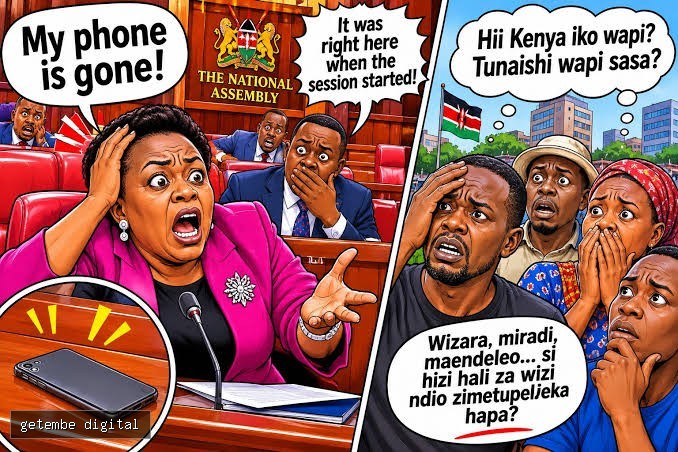
The controversy took another interesting turn when nominated MP Sabina Chege claimed that her iPhone 16 was stolen within Parliament in 2023 and that she had never recovered it.
Her account, however, raises an obvious factual question. The iPhone 16 was officially released in September 2024, meaning the timeline in her statement does not add up. Whether it was a slip of the tongue or a reference to another device, such inconsistencies only make the need for clarity more important.
Meanwhile, Millie Odhiambo appeared to downplay the matter, describing the concerns as "small things" and cautioning against tarnishing Parliament's name, while dismissing the complainant as a crybaby.
But are these really small things?
And this is where the issue becomes bigger than Sabina Chege's missing phone.

Parliament is not an ordinary workplace. It is an institution funded by taxpayers and occupied by people who have been entrusted with the responsibility of representing millions of Kenyans. Its members legislate, approve national budgets, scrutinise government expenditure and oversee public institutions.
Yet, when an allegation of misconduct emerges within their own ranks, the response appears to be more about protecting Parliament's image than establishing the truth.
Millie's response is particularly worth examining. Calling a colleague a crybaby and suggesting that members should simply contribute money to buy her another phone misses the point entirely. The issue is not whether Sabina can afford another iPhone. It is whether a legislator's property can allegedly disappear within Parliament, CCTV footage can reportedly capture someone picking it up, and the matter can remain unresolved for years.
Replacing the phone does not replace accountability.
Kenyans do not interact with their MPs only through parliamentary debates. They entrust them with public responsibilities that directly affect their lives.
Consider the National Government Constituencies Development Fund (NG-CDF), constituency development projects, bursaries, school infrastructure and other public allocations managed or overseen through elected leadership.
These are resources meant for ordinary citizens. A student waiting for a bursary, a school struggling with inadequate classrooms and a community waiting for a completed project all depend on the integrity of the people entrusted with these responsibilities.
If lawmakers cannot demonstrate accountability over an incident involving personal property within their own institution, what assurance do citizens have that the much larger public resources under their oversight are being handled responsibly?
This is not an allegation that every MP steals public money. Neither is the disappearance of a phone proof of financial corruption. But public confidence is built through consistent standards of conduct, transparency and accountability.
An institution cannot demand public trust while treating legitimate questions about misconduct as attacks on its reputation.
There is another disturbing dimension to this controversy: the apparent reluctance to confront uncomfortable questions.
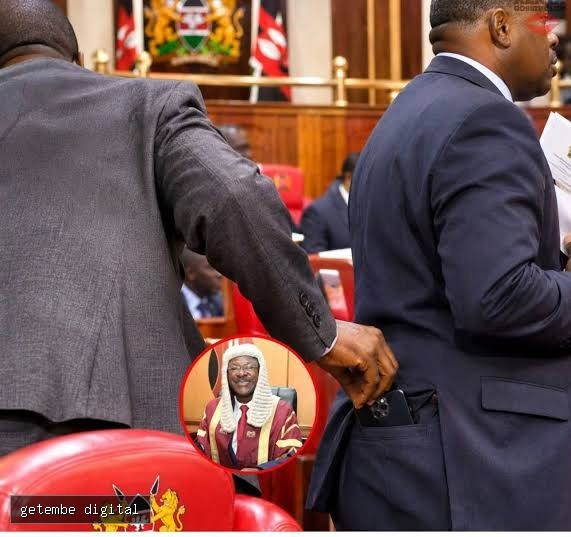
Speaker Moses Wetang'ula has said CCTV footage captured a male MP picking up a phone and that the individual denied taking it when confronted. He has since committed to forwarding the footage to the Powers and Privileges Committee for examination, while recusing himself from chairing the matter.
That is an important step, but Kenyans deserve more than assurances.
Who was captured in the footage? What happened to the phone? Was a formal investigation conducted? Why has the matter remained unresolved for more than three years?
These are legitimate questions that should not be dismissed as social media drama or political mudslinging. The committee should establish the facts, give the accused member an opportunity to respond and make its findings public.
And while Parliament investigates the alleged phone incident, Sabina Chege must also clarify the iPhone 16 timeline. She placed the incident on June 8, 2023, yet Apple released the iPhone 16 series in September 2024. That discrepancy deserves an explanation, just as the disappearance of the device deserves an investigation.
Ultimately, this controversy exposes a much deeper crisis facing Kenyan leadership: the widening gap between the standards citizens expect and the conduct they sometimes witness from their representatives.
Every election, politicians ask for votes and promise to protect public resources, fight corruption, deliver development and represent the interests of their constituents.
But accountability cannot be a campaign slogan reserved for political opponents. It must begin within their own institutions.
An MP who demands investigations into corruption in government must be equally willing to account for misconduct within Parliament. A legislator who demands respect for public institutions must understand that protecting an institution's reputation means confronting wrongdoing, not dismissing those who raise concerns.
Kenyans are already asking difficult questions about stalled projects, questionable expenditure, constituency development funds and the management of public resources. This latest incident only adds another layer to the trust deficit.
Perhaps the most uncomfortable question is not who took Sabina Chege's phone. It is why an institution entrusted with overseeing billions of shillings in public resources appears to be struggling to resolve an allegation involving one missing phone.
If MPs cannot be trusted with one another's phones, why should Kenyans blindly trust them with their money?
And more importantly, when 2027 comes around, will Kenyans be voting for leaders based on what they promise, or will they demand evidence of what they have done with the trust already given to them?
Do you trust your MP?
ADVERTISEMENT
Watch Getembe TV Live
Broadcast Getembe TV Live Stream
Listen Getembe FM Live
Tune in to Getembe FM Live Broadcast
How do you feel about this article?
Let us know by choosing a reaction below.

Written by FRANKLINE NYANDORO
Reporter and staff writer at Getembe News.
Comments 0
Please log in to participate in the comments section.
No comments yet. Be the first to share your thoughts!
ADVERTISEMENT
Related Stories

Have a news tip?
Do you have an investigation, local story or news event you think we should cover? Contact our newsroom directly.
Submit Tip
Mobile App
Download Getembe Digital App Today
Download Getembe Digital App today for live news updates, breaking notifications, and seamless live streaming.