
STRAWBERRY UGALI, EMPTY MAIZE STORES: ARE KENYA’S PRIORITIES IN ORDER?
Strawberry ugali for export sounds ambitious, but Kenya is importing maize and millers want reserves. Are the country’s food priorities in order?

Watch Getembe TV Live
Broadcast Getembe TV Live Stream
Listen Getembe FM Live
Tune in to Getembe FM Live Broadcast
There is something particularly uncomfortable about discussing strawberry and vanilla-flavoured ugali in a country still grappling with the challenge of securing enough maize to feed its population. While food innovation and expanding export markets are worthwhile ambitions, one cannot help but question whether Kenya's immediate priorities are receiving the attention they deserve.
Industry Principal Secretary Juma Mukwana recently challenged maize millers to explore unconventional ugali varieties, suggesting that strawberry and vanilla flavours could help Kenya's staple food penetrate international markets. Speaking during the Kenya Millers Fortification Index Awards on Saturday, October 31, he argued that the country must rethink food production as its population approaches an estimated 70 million by 2050.

It is an interesting proposition. Kenya should certainly be ambitious about its food industry, explore new markets and encourage manufacturers to develop products that can compete internationally. However, ambition must also be accompanied by an honest assessment of the country's present circumstances.
The government announced plans to import up to 25 million 90-kilogramme bags of maize to address an anticipated domestic deficit following poor harvests in major producing regions. Agriculture Cabinet Secretary Mutahi Kagwe attributed the expected shortfall to climate-related challenges affecting agricultural production.
More tellingly, during the same conversation about innovation, Cereals Millers Association Chairman Beju Shah called on the National Cereals and Produce Board to maintain adequate maize reserves, noting that millers were struggling to access sufficient local stocks.
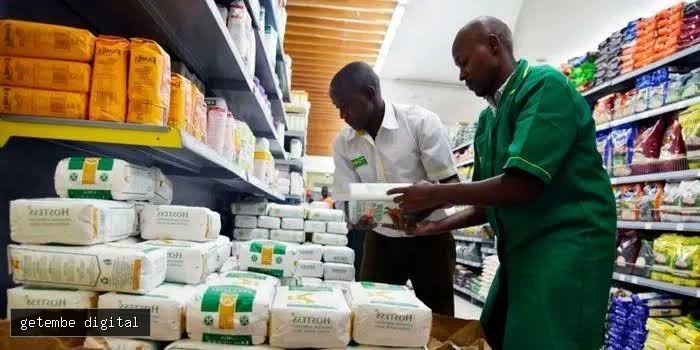
That response exposes a more immediate concern. Before asking manufacturers to experiment with new flavours and pursue international markets, is the country adequately addressing the availability, storage and supply of the primary ingredient?
The bigger issue here is not whether strawberry-flavoured ugali would find buyers abroad. It is whether policymakers are giving sufficient attention to the foundations upon which such ambitions must be built.
Kenya's agricultural challenges are hardly limited to maize imports. Farmers need reliable markets, affordable inputs, better storage facilities, irrigation infrastructure and protection against unpredictable weather. Millers need dependable grain supplies, while consumers need affordable food on their tables.
These are not competing ambitions. A country can pursue industrial innovation while strengthening its food security. However, the sequence and seriousness with which these challenges are addressed matter.
There is also a governance question worth asking. When senior government officials address industry stakeholders, the public should expect conversations that connect long-term economic ambitions with the immediate problems facing the sectors they oversee.
A projection of 70 million people by 2050 should certainly inspire long-term planning. But preparing for that population requires more than imagining new versions of familiar foods. It requires strengthening agricultural productivity, securing supply chains, investing in food processing and ensuring that the country can sustainably feed the population it already has.
Perhaps strawberry and vanilla ugali will eventually become a successful Kenyan export. There is nothing inherently wrong with exploring that possibility.
But before Kenya starts imagining how its ugali will cross oceans, it must confront a more fundamental question: can it reliably produce, store and supply enough maize to meet the needs of its own people?
The conversation about innovation is welcome. The conversation about priorities, however, cannot be postponed.
ADVERTISEMENT
Watch Getembe TV Live
Broadcast Getembe TV Live Stream
Listen Getembe FM Live
Tune in to Getembe FM Live Broadcast
How do you feel about this article?
Let us know by choosing a reaction below.

Written by FRANKLINE NYANDORO
Reporter and staff writer at Getembe News.
Comments 0
Please log in to participate in the comments section.
No comments yet. Be the first to share your thoughts!
ADVERTISEMENT
Related Stories

Have a news tip?
Do you have an investigation, local story or news event you think we should cover? Contact our newsroom directly.
Submit Tip
Mobile App
Download Getembe Digital App Today
Download Getembe Digital App today for live news updates, breaking notifications, and seamless live streaming.